

Reinventing Humanitarianism

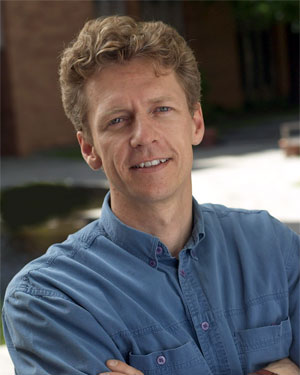
Dr. James Orinski
Dr. Orbinski is past international president (1998-2001) of Médecins Sans Frontières (MSF) / Doctors Without Borders. MSF is the world’s largest fully independent medical humanitarian organization with over 400 projects in more than 80 different countries. In 1999 MSF was awarded the Nobel Peace Prize.
Orbinski has represented MSF in numerous settings and emergencies in the past years, including at the UN Security Council, many national parliaments, the World Health Organization (WHO), The Office of the United Nations High Commissioner for Refugees (UNHCR), The Office of the UNUNHCR, in the Sudan, Kosovo, Russia, Cambodia, South Africa, India and Thailand.
He is noted for his clear, strong stance that insists on the duty of states to respect people’s right to humanitarian assistance in war or other instances of political failure, and on our individual responsibility to act meaningfully in the face of human suffering.
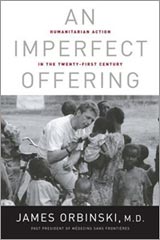
I first heard of Dr Orbinski and the work he was doing back more than a decade ago with Doctors Without Borders and my profound respect and admiration for this man continues to grow with An Imperfect Offering: Humanitarian Action for the 21st Century.I finished this book last evening and found myself on numerous pages fighting back tears. An Imperfect Offering is more than a memoir of life on the frontlines of disaster — it is a provocative and revealing meditation on what it means to be human. What do we do, and what should we do, in the face of unspeakable suffering.
In addition to his brilliantly written book, I also recommend the documentary titled Triage. Triage will unsettle and move as it pointedly asks disturbing questions at the heart of the humanitarian dilemma. What can any one individual really do to bring peace to those who suffer? Where does humanitarianism end and raw politics begin? How does the sight of unspeakable evil affect the soul?
Smartly directed by Patrick Reed, this remarkable film provides no definitive answers, but celebrates the best in the human spirit while staring unblinkingly at the worst.
Bristling with energy, Triage brings the causes and cures of conflict into sharp focus through Orbinski’s unflinching, fearless perspective. He is a man who believes with all of his heart that every life counts.
I hope Dr. James Orbinski’s life’s work compels you to further explore the current challenges facing humanitarianism.



2 Responses to “Reinventing Humanitarianism”
Margareta Czira September 12th, 2009 at 9:12 am
I am a doctor psychiatrist, now pensioner but yet authorized for working in a private Health Services “Industry”. I knowed the Medecins Sans Frontieres Organiztion on January 1990, one month after the sanguinary revolution (december 1989) which breaks down the communism in Romania.
This was the first, most consistent and perseverent (near 3 years) international medical help received in the Psichiatry and Neurology Hospital from Oradea town – Romania.
The team arrived in a microbuss, with some specifically drogs, but more dressings. It was an informational visit… Some days they accompanied us in our daily activity, folowed by long discutions about our needs.
They declared to be amazed by our profesional knowledge and disponibility (on Romania always was, and also now are, very good Medical Universies), by the high level of individual and group psychoterapy (as psychodrama Moreno, musictherapy – much used on night for replace the lack of hypnotique drogs, and ergotherapy), but also amazed by the miswerable conditions of drogtherapy – the imposed daily cost of drogs for an illmen wass the equivqlqnt of $0.17 (No, it isn’t an writing mistake), because the psychycal disordered ill pacient was considered irrecuperable, unwanted and periculos guy. Not enough syringes and needles, improvised Oxygen instalation (by tubes from recuperated perfuzion packs, connected with leucoplast), not enough plates and covers, soap and closet paper, etc, etc.
But we had high walls and bars on windows… They go, but returned after 2 weeks in a very big buss bringing a first transport of drugs, investigation technology, an Oxygen station reformed from the renewed Bordeaux Hospital, utility things, soap and others…, professional books and reviews and much friendship, love and moral support. Near 3 years they was present in all Psychiatric Hospitals from Romania and initiated the radical change in the psychiatrical assistence on Romania.
I cannot forget this; now , writing this comment, I live again the admiration, gratitude and love feelings. I know along that the human can be so sublime such as miserable, but the MSF viewed activity re-born in me the hope in the human soul and the enthusiasm to contribute for.
Thank you Gary your articles. Finally, you pulledout me from my silence.
Colleen schneider September 16th, 2009 at 6:40 am
I recently met a young gentleman from Burundi who happened to be in Australia when the genocide happened. He was granted permanent residency here.
I got to thinking about how little I really knew about Africa. I have been reading books from my local library and happened to take out “An Imperfect Offering” by Dr. Orbinski.
I have read it and re read parts and am having trouble letting go of it and returning it to the library. I think I am going to have to purchase a copy for myself. It has made me realize what wonderful work Doctors Without Borders does in the world and how fortunate I am to live in Australia.